

















ธนาคารกรุงเทพ เปิด 5 เมกะเทรนด์ ผ่านเวทีสัมมนาใหญ่ ‘AEC Business Forum 2026’
ธนาคารกรุงเทพ เปิด 5 เมกะเทรนด์ ผ่านเวทีสัมมนาใหญ่ ‘AEC Business Forum 2026’
ดึง CEO บริษัทชั้นนำ แชร์มุมมองอาเซียนยุคใหม่ พลิกความท้าทาย รู้ทันเกมเศรษฐกิจโลก
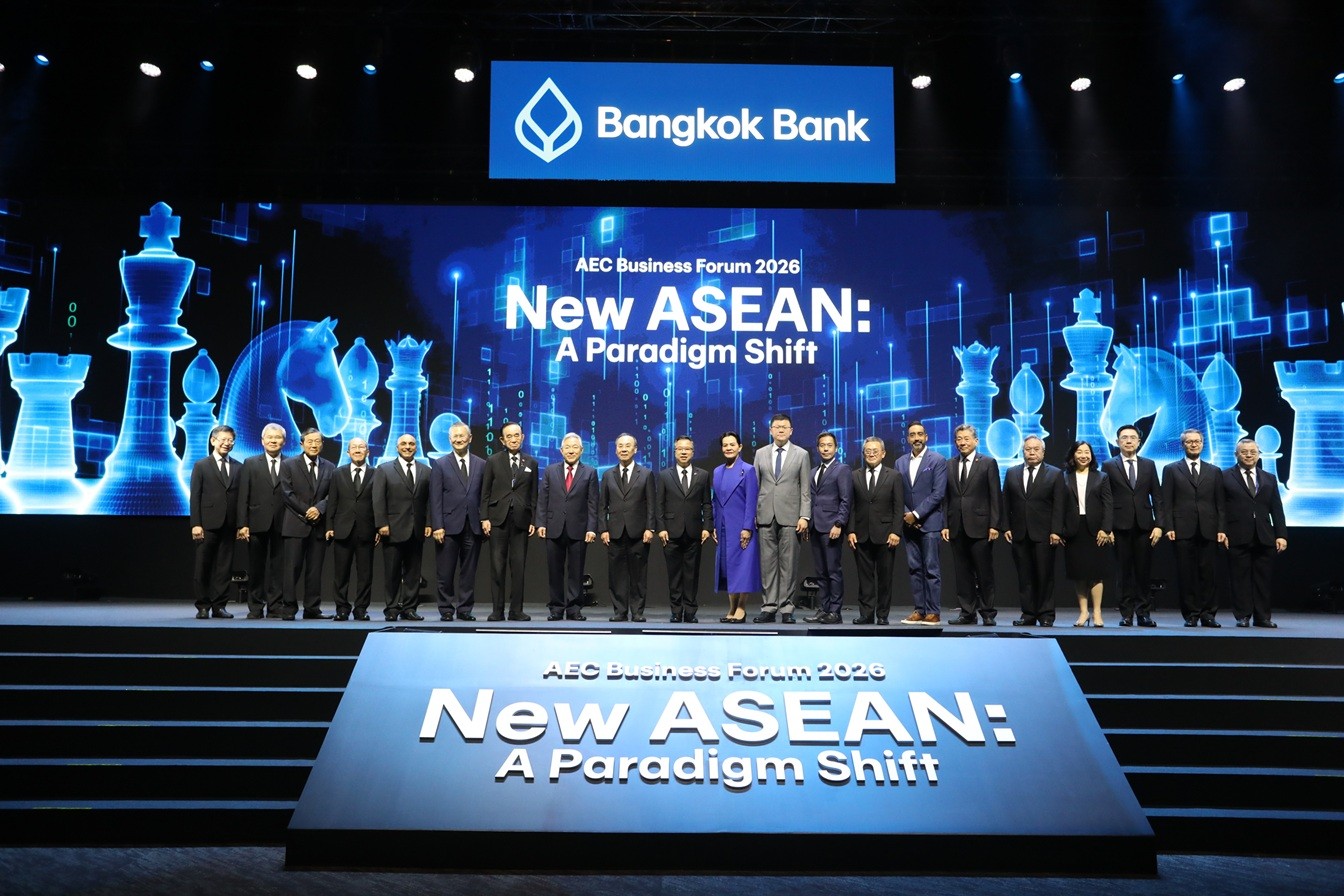
ธนาคารกรุงเทพ จัดงานสัมมนาใหญ่ประจำปี ‘AEC Business Forum 2026’ เปิด 5 เมกะเทรนด์ กำหนดอนาคตอาเซียนยุคใหม่ ทั้งความท้าทายจากความขัดแย้งทางภูมิรัฐศาสตร์ กระแสการค้าโลก เทคโนโลยี สภาพภูมิอากาศ และโครงสร้างประชากร แนะคว้าโอกาสสำคัญผ่านการสร้างความร่วมมือ หนุนภูมิภาคอาเซียนเติบโตสู่ดาวเด่น พร้อมดึงผู้บริหารบริษัทชั้นนำของโลก แชร์มุมมองแนวคิด และกลยุทธ์สู่ความสำเร็จอย่างยั่งยืน

นายชาติศิริ โสภณพนิช กรรมการผู้จัดการใหญ่ ธนาคารกรุงเทพ จำกัด (มหาชน) กล่าวในโอกาสเปิดงานสัมมนา ‘AEC Business Forum 2026’ โดยธนาคารจัดขึ้นเป็นครั้งที่ 7 ภายใต้ข้อหัว ‘New ASEAN: A Paradigm Shift’ ว่า ในปี 2026 โลกยังมีความเสี่ยง ความผันผวน และความไม่แน่นอน จากปัจจัย 5 ด้าน ซึ่งเป็นพลวัตสำคัญที่เป็นทั้งอุปสรรค โอกาส และตัวกำหนดอนาคตของอาเซียน ได้แก่
1.ความตึงเครียดทางภูมิรัฐศาสตร์ ที่ทำให้หลายประเทศต้องมุ่งเน้นการรักษาสมดุลและส่งเสริมความร่วมมือภายในและภายนอกประเทศ เพื่อเสริมสร้างเศรษฐกิจภูมิภาคให้แข็งแกร่ง สำหรับประเทศไทย ธนาคารแห่งประเทศไทยก็ได้ผลักดันการใช้เงินบาทและสกุลเงินท้องถิ่นในการค้าขายระหว่างประเทศแทนสกุลเงินดอลลาร์ พร้อมส่งเสริมความร่วมมือทางการเงิน เชื่อมโยงระบบการลงทุน และการชำระเงินในภูมิภาคอาเซียน ซึ่งจะมีส่วนสนับสนุนให้ธุรกิจไทยสามารถเข้าถึงตลาดที่ใหญ่ขึ้นกว่า 660 ล้านคนที่มีผลิตภัณฑ์มวลรวม หรือ GDP กว่า 4.25 ล้านล้านดอลลาร์
2.การเปลี่ยนแปลงของกระแสการค้าโลก อาเซียนกำลังกลายเป็นผู้เล่นสำคัญในระบบการค้าโลกแบบหลายขั้ว ด้วยตลาดขนาดใหญ่และขนาดเศรษฐกิจที่คาดการณ์ว่าจะมีขนาดใหญ่เป็นอันดับ 4 ของโลกภายในปี 2030 กำลังแรงงานมหาศาล และทำเลที่เชื่อมโยงห่วงโซ่อุปทานโลกอย่างโดดเด่น ทำให้การลงทุนโดยตรงจากต่างประเทศ หรือ FDI (Foreign Direct Investment) เพิ่มขึ้นต่อเนื่อง จาก 5% เมื่อ 10 ปีก่อน เป็น 20% ในปี 2024 โดยพุ่งเป้าไปที่ประเทศเวียดนาม อินโดนีเซีย ไทย มาเลเซีย สิงคโปร์และฟิลิปปินส์ โดยเฉพาะในอุตสาหกรรมยุทธศาสตร์ เช่น เซมิคอนดักเตอร์ รถยนต์ไฟฟ้า ดาต้าเซ็นเตอร์ และไบโอเทคโนโลยี เป็นต้น
3.การเปลี่ยนผ่านของเทคโนโลยี อาเซียนกำลังยกระดับสู่ศูนย์กลางนวัตกรรมด้านเทคโนโลยี ด้วยแรงหนุนจากประชากรยุคดิจิทัล การลงทุนใหม่หลั่งไหลเข้าสู่สาขาต่าง ๆ เช่น การลงทุนในเทคโนโลยีปัญญาประดิษฐ์ หรือ AI (Artificial Intelligence) ดาต้าเซ็นเตอร์ และการผลิตขั้นสูง ซึ่งช่วยเร่งการเติบโตในหลายภาคส่วน โดยสิงคโปร์ตั้งเป้าเป็นศูนย์กลาง AI ระดับโลก ซึ่งปัจจุบันมีสตาร์ทอัพด้าน AI มากกว่า 1,000 ราย เป็นที่ตั้งของบริษัทเทคโนโลยีชั้นนำระดับโลก เช่น OpenAI Google และ NVIDIA ในขณะที่หลายประเทศในภูมิภาคต่างเดินหน้ากลยุทธ์ด้าน AI ของตนเอง อย่างไรก็ตาม SME ซึ่งเป็นรากฐานเศรษฐกิจของประเทศต้องเผชิญแรงกดดันจากการที่ตลาดและเทคโนโลยีเปลี่ยนแปลงอย่างรวดเร็ว จึงจำเป็นต้องได้รับการสนับสนุนเพื่อให้สามารถปรับตัวสู่ยุคดิจิทัลได้
4.การเปลี่ยนแปลงสภาพภูมิอากาศ ที่นำไปสู่กฎระเบียบและมาตรฐานสากลใหม่ ๆ เช่น CBAM และ EUDR ของสหภาพยุโรป ส่งผลให้รูปแบบการค้าเปลี่ยนสู่ห่วงโซ่อุปทานคาร์บอนต่ำ ดังนั้น ทุกธุรกิจต้องปรับตัว และวางแผนระยะยาวเพื่อรับมือและเปลี่ยนผ่านธุรกิจที่มุ่งสู่ Net Zero ซึ่งความร่วมมือสู่การเปลี่ยนผ่านดังกล่าวยังเป็นโอกาสให้อาเซียนกลายเป็นผู้นำโลกด้านการเติบโตอย่างยั่งยืนด้วย
5.การเปลี่ยนแปลงด้านโครงสร้างประชากร สิงคโปร์และไทยกำลังเข้าสู่สังคมสูงวัยอย่างรวดเร็ว เกิดการขาดแคลนแรงงานในภาคเกษตร ทำให้ภูมิภาคต้องดึงดูดคนรุ่นใหม่กลับสู่ภาคเกษตร และใช้เทคโนโลยีสมัยใหม่ เช่น AI เพื่อเพิ่มประสิทธิภาพและรักษาบทบาทของอาเซียนในฐานะผู้ผลิตอาหารรายใหญ่ของโลก

“อาเซียนกำลังก้าวเข้าสู่ยุคใหม่ที่เต็มไปด้วยความท้าทายจากภูมิรัฐศาสตร์ การค้า เทคโนโลยี สภาพภูมิอากาศและโครงสร้างประชากรที่เปลี่ยนไป แต่ทุกปัจจัยล้วนเป็นโอกาสให้ภูมิภาคอาเซียนได้ยกระดับความสามารถในการแข่งขัน หากประเทศสมาชิกเร่งเสริมความร่วมมือ ใช้ประโยชน์จากเมกะเทรนด์ และลงทุนในเทคโนโลยีสีเขียว ดิจิทัล และทักษะแรงงาน อาเซียนจะสามารถก้าวขึ้นเป็นภูมิภาคที่น่าลงทุนที่สุดแห่งหนึ่งของโลกได้ ดังนั้น ความร่วมมือคือกุญแจสำคัญที่จะเปลี่ยนความไม่แน่นอนให้เป็นพลังขับเคลื่อนอนาคตของภูมิภาค โดยธนาคารกรุงเทพ ในฐานะ ‘สถาบันการเงินชั้นนำของภูมิภาค’ พร้อมให้การสนับสนุนลูกค้าด้วยเครือข่ายสาขาที่ครอบคลุม 9 จาก 11 ประเทศสมาชิกอาเซียน เพื่อให้สามารถคว้าโอกาสใหม่ ๆ และสร้างการเติบโตให้กับธุรกิจได้อย่างแข็งแกร่งและยั่งยืน” นายชาติศิริ กล่าว
ในงานสัมมนายังได้รับเกียรติจาก นายนฤตม์ เทอดสถีรศักดิ์ เลขาธิการคณะกรรมการส่งเสริมการลงทุน (บีโอไอ) กล่าวปาฐกถาหัวข้อ “The New ASEAN Economy: Future-Focused Thailand, Opportunities in Emerging Industries” พร้อมด้วยผู้บริหารบริษัทชั้นนำ ได้แก่ นางสมฤดี ชัยมงคล Senior Executive Committee and Former CEO บริษัท บ้านปู จำกัด (มหาชน) นายฮั่ว เตียง ลิม ประธานเจ้าหน้าที่บริหาร บริษัท เฟรเซอร์ส พร็อพเพอร์ตี้ (ประเทศไทย) จำกัด (มหาชน) และประธานเจ้าหน้าที่บริหาร ตลาดเกิดใหม่ ระดับภูมิภาคเอเชีย กลุ่มบริษัทเฟรเซอร์ส พร็อพเพอร์ตี้ ลิมิเต็ด นายเย็บ ซู ชวน ประธานและประธานเจ้าหน้าที่บริหาร บริษัท อาปิโก ไฮเทค จำกัด (มหาชน) นายเท็ดดี้ นูรียันโต อูโตโม President Director, PT Merdeka Battery Materials Tbk ร่วมเสวนาในหัวข้อ “ASEAN’s Next Wave: New Sector Opportunities to Capture Global FDI”
สำหรับวงเสวนาหัวข้อ “Navigating Trade Fragmentation in a Geopolitical Era” ได้รับเกียรติจาก นายวสิษฐ แต้ไพสิฐพงษ์ ประธานเจ้าหน้าที่บริหาร บริษัท เบทาโกร จำกัด (มหาชน) นายอบิจิต ดัตต้า Former Managing Director & Head of International Business, SCG international Corporation and Advisor, SCG Distribution & Retail and Director SAMEA, SCG International ดร.กอบศักดิ์ ภูตระกูล กรรมการรองผู้จัดการใหญ่ ธนาคารกรุงเทพ จำกัด (มหาชน) ในขณะที่วงเสวนาหัวข้อ “Strategies for Success in the Age of Tech Fragmentation” ก็ได้รับเกียรติจาก นายดิเพน เมตะ Managing Director, Asia Financial Services, Microsoft ดร.ชวพล จริยาวิโรจน์ กรรมการผู้จัดการ บริษัท หัวเว่ย เทคโนโลยี่ (ประเทศไทย) จำกัด ดร.บุรณิน รัตนสมบัติ ประธานเจ้าหน้าที่ปฏิบัติการกลุ่มธุรกิจใหม่และความยั่งยืน บริษัท ปตท. จำกัด (มหาชน) ร่วมพูดคุย เปิดมุมมองพร้อมแชร์ประสบการณ์และกลยุทธ์ในการทำธุรกิจให้ประสบความสำเร็จ
งานสัมมนา ‘AEC Business Forum 2026’ ครั้งที่ 7 ภายใต้ข้อหัว ‘New ASEAN: A Paradigm Shift’ จัดขึ้นในวันพุธที่ 14 มกราคม 2569 ณ โรงแรมเซ็นทาราแกรนด์และบางกอกคอนเวนชันเซ็นเตอร์ เซ็นทรัลเวิลด์

Bangkok Bank’s ‘AEC Business Forum 2026’
shares insights on how ASEAN CEOs can leverage 5 megatrends to
turn challenges into opportunities amid global economic shifts
Bangkok Bank unveiled five megatrends shaping the ‘new ASEAN’ at its annual flagship event, the ‘AEC Business Forum 2026’. These covered challenges arising from geopolitical tensions, shifts in global trade, technological transformation, climate change, and demographic changes. The forum explored opportunities to collaborate and position ASEAN as a rising economic star, while inviting senior executives from leading global companies to share perspectives, ideas, and strategies for sustainable success.
Bangkok Bank President Mr. Chartsiri Sophonpanich delivered his opening speech ‘New ASEAN: A Paradigm Shift’ which addressed how the world throughout 2026 will continue to face risks, volatility, and uncertainty driven by five critical factors—each of which present challenges and opportunities that will define ASEAN’s future:

1.balance and foster international cooperation to strengthen regional economies. For Thailand, the Bank of Thailand has promoted the use of the baht and other local currencies in cross-border trade to reduce reliance on the U.S. dollar, while enhancing financial cooperation, investment connectivity, and payment systems across ASEAN. These efforts will help Thai businesses access a larger market of over 660 million people with a combined GDP of more than USD 4.25 trillion.
2.Shifts in global trade - ASEAN is becoming a key player in a multipolar global trade
system supported by its large market and economy, which is expected to rank fourth globally by 2030, along with a vast labor force and strategic location for global supply chains. Foreign direct investment (FDI) has surged from 5% a decade ago to 20% in 2024, targeting countries such as Vietnam, Indonesia, Thailand, Malaysia, Singapore, and the Philippines, particularly in strategic industries like semiconductors, electric vehicles, data centers, and biotechnology.
3.Technological transformation - ASEAN is advancing toward becoming a hub for technology
innovation, driven by a digital-savvy population and new investments in areas such as Artificial Intelligence (AI), data centers, and advanced manufacturing which lead to growth in many sectors. Singapore aims to position itself as a global AI hub, hosting over 1,000 AI startups and serving as a base for leading tech firms such as OpenAI, Google, and NVIDIA. Meanwhile, other ASEAN nations are implementing their own AI strategies. However, SMEs—the backbone of regional economies—are facing pressure from rapid market and technology shifts and are in need of support to accelerate their digital transformation.
4.Climate change – New global regulations such as the EU’s Carbon Border Adjustment Mechanism (CBAM) and Deforestation Regulation (EUDR) are moving trade toward low-carbon supply chains. Businesses must adapt and create long-term plans for their transition to net zero. This shift also presents ASEAN with the opportunity to lead the world in sustainable growth.
5.Demographic change Singapore and Thailand are aging rapidly, creating labor shortages in the agriculture sector. The region must attract younger generations back to farming and leverage modern technologies such as AI to boost productivity and maintain ASEAN’s role as a leading global food producer.
“ASEAN is entering a new era filled with challenges in geopolitics, trade, technology, climate change, and demographic change. Nevertheless, each of these factors offers opportunities to enhance competitiveness. If member countries strengthen cooperation, harness megatrends, and invest in green technology, digital innovation, and workforce skills, ASEAN can become one of the world’s most attractive investment destinations. Collaboration is key to turning uncertainty into a driving force for the region’s future. As a leading regional financial institution, Bangkok Bank is committed to supporting customers through its presence in nine of the 11 ASEAN countries, enabling them to seize new opportunities and achieve sustainable growth,” said Mr. Chartsiri.
The forum also featured keynote speeches and panel discussions with distinguished leaders. Secretary-General of the Board of Investment Mr. Narit Therdsteerasukdi delivered a keynote on “The New ASEAN Economy: Future-Focused Thailand, Opportunities in Emerging Industries.” The panel discussion on “ASEAN’s Next Wave: New Sector Opportunities to Capture Global FDI” was joined by Mrs. Somruedee Chaimongkol, Senior Executive Committee and Former CEO of Banpu, Mr. Lim Hua Tiong, CEO of Frasers Property (Thailand) and Frasers Property Limited’s Emerging Markets, Asia portfolio, Mr. Yeap Swee Chuan, Executive Director AAPICO Hitech, and Mr. Teddy Nuryanto Oetomo, President Director Merdeka Battery Materials.

Speakers for the panel discussion on “Navigating Trade Fragmentation in a Geopolitical Era,” included Mr. Vasit Taepaisitphongse, CEO of Betagro, Mr. Abhijit Datta, former Managing Director & Head of International Business, SCG International Corporation and Advisor at SCG Distribution & Retail, and Director SAMEA, SCG International, and Dr. Kobsak Pootrakul, Senior Executive Vice President of Bangkok Bank. Meanwhile, the panel discussion on “Strategies for Success in the Age of Tech Fragmentation” featured Mr. Dipen Mehta, Managing Director, Asia Financial Services of Microsoft, Dr. Chawapol Jariyawiroj, President of Huawei Technologies (Thailand), and Dr. Buranin Rattanasombat, Chief New Business and Sustainability Officer, PTT, who shared insights, experiences, and strategies for business success.
The 7th ‘AEC Business Forum 2026’, under the theme ‘New ASEAN: A Paradigm Shift’, was held on Wednesday, January 14, 2026, at Centara Grand and Bangkok Convention Centre, CentralWorld.
